
There’s been a buzz about SEO, GEO, AEO and whatever other search/AI abbreviation you can think of for a while now. Every few years it’s something new.
And here’s the thing – over 50% of all website traffic comes from organic search. It would be insane not to focus on getting more organic search traffic to your website. It’s not a vanity metric, it’s where a lot of your customers are.
The challenge is that customer behaviour has fundamentally changed. The way people search, purchase, and contact companies is nothing like it was five years ago. Customers no longer pick up the phone, if that information isn’t on your website, they’ve already found it on your competitors’ website. They’re not typing basic keywords into Google anymore. They’re asking questions, searching on social media, talking to AI chatbots like they’re asking a friend for advice.
Content over Keywords
Dave has a story about when someone said, “you’re just putting the same words in a different order” and while this is what all of us do every day (Dave’s response was “that’s the basis of the English language”), those words need to bring value. You can’t just stuff a few keywords in a blog or service page and expect to rank highly anymore.
I’m not saying bang out crap content using ChatGPT that’s full of bullet points and the typical phrases “unlocking potential” and “in the modern digital landscape”, I’m talking about content that answers questions, provides insights based on facts and is shareable.
The rise of 0 click searches mean that users no longer need to leave the search engine, so if you want your brand to feature you need to be producing high quality, engaging content. You might not get the click then, but brand awareness and trustworthiness count just as much.
Your SEO efforts need to be based on what people are searching for, don’t just look at single keywords like “divorce solicitor” look for questions and phrases (sometimes called long tail keywords) like “why do I need a divorce solicitor” or “how can a solicitor help split finances in divorce”. These are what you need to base your content around. Think of writing your content more like an essay question in your GCSE exams. Answer the question, explain your point, reference a case or study and close your piece. You’d get top marks for that formula, and it works for SEO too.
Digital PR is more valuable than ever
Digital PR, earned media, and brand mentions are about getting your business mentioned and linked on someone else’s website, when your business is cited in relevant articles and industry publications, it strengthens your visibility in two critical places: search engine rankings and AI-generated responses from LLMs.
Here’s why: AI chatbots and search engines both use brand mentions and external links as authority signals. They’re asking the same question: “Is this business credible in this space?” When reputable sources mention you, the answer becomes clearer.
This concept isn’t new, in the SEO world we call it E-A-T-T (Experience, Expertise, Authoritativeness, Trustworthiness). What’s changed is that now it matters not just for search rankings, but for how AI systems understand and reference your brand.
External citations from relevant sources tell both algorithms and AI systems that you’re a recognized authority within your niche. That visibility compounds: stronger authority → better rankings → more frequent mentions in AI summaries.
PPC is no longer the driving force it used to be
If SEO is the long game, PPC was the quick game. I say was and not is as the PPC world is as ever changing as the search world. Google Ads used to be a sure-fire way to get people to get on your website and in turn convert. But how times have changed.
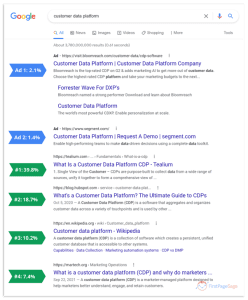
Google has now changed it’s search engine results page, you can hide sponsored results, AI overviews appear in more than 50% of searches and click through rates have plummeted across the SERPs.
Click through rates for ads have always been low, but a less than 4% chance of being clicked despite being top of the page is tragic when compared to nearly 40% CTR for the first organic result (where there is no AI overview that is). This is proof that users are ignoring people who pay and go straight to those who rank organically.
SEO is not one and done
The biggest mistake businesses make isn’t ignoring SEO; it’s treating it as a one-off project.
A website is launched. Keywords are added. A few blog posts are published. Then… nothing happens and they are left wondering why they bothered in the first place.
The reality is that search is super competitive. Google updates its algorithm constantly. User behaviour shifts. Your competitors are investing and if you’re not actively evolving your SEO strategy, you’re slowly losing visibility to those who are.
This is why 70% of small businesses who don’t have a defined SEO strategy are effectively leaving revenue on the table. They’re treating a long-term asset like a checkbox.
An effective SEO strategy isn’t about placing some keywords on a page and forgetting, it’s about ongoing refinement, staying ahead of algorithm changes, and consistently aligning your content with what your customers are actually searching for.
Pole position awaits
The bottom line is simple: SEO isn’t optional anymore. It’s how majority of your customers will find you. The question isn’t whether to invest in SEO, it’s whether you’re willing to let competitors beat you to that rank 1 spot.
Not sure where to start? Let’s chat. Contact us for an SEO consultation and we’ll show you exactly what’s holding you back and how to improve your visibility across search engines and AI.
